Built with you, not handed to you.
Your plan starts from your ride files and from what you tell me. You read it, you question it, and it adapts with you.
Your goal, your real week.
We start with what you want, where you come from and the week you really have: work, family, sleep, the hours you can actually train. And what keeps riding fun for you. If rides with friends keep you motivated, they stay in the plan.
Same test result. Opposite plans.
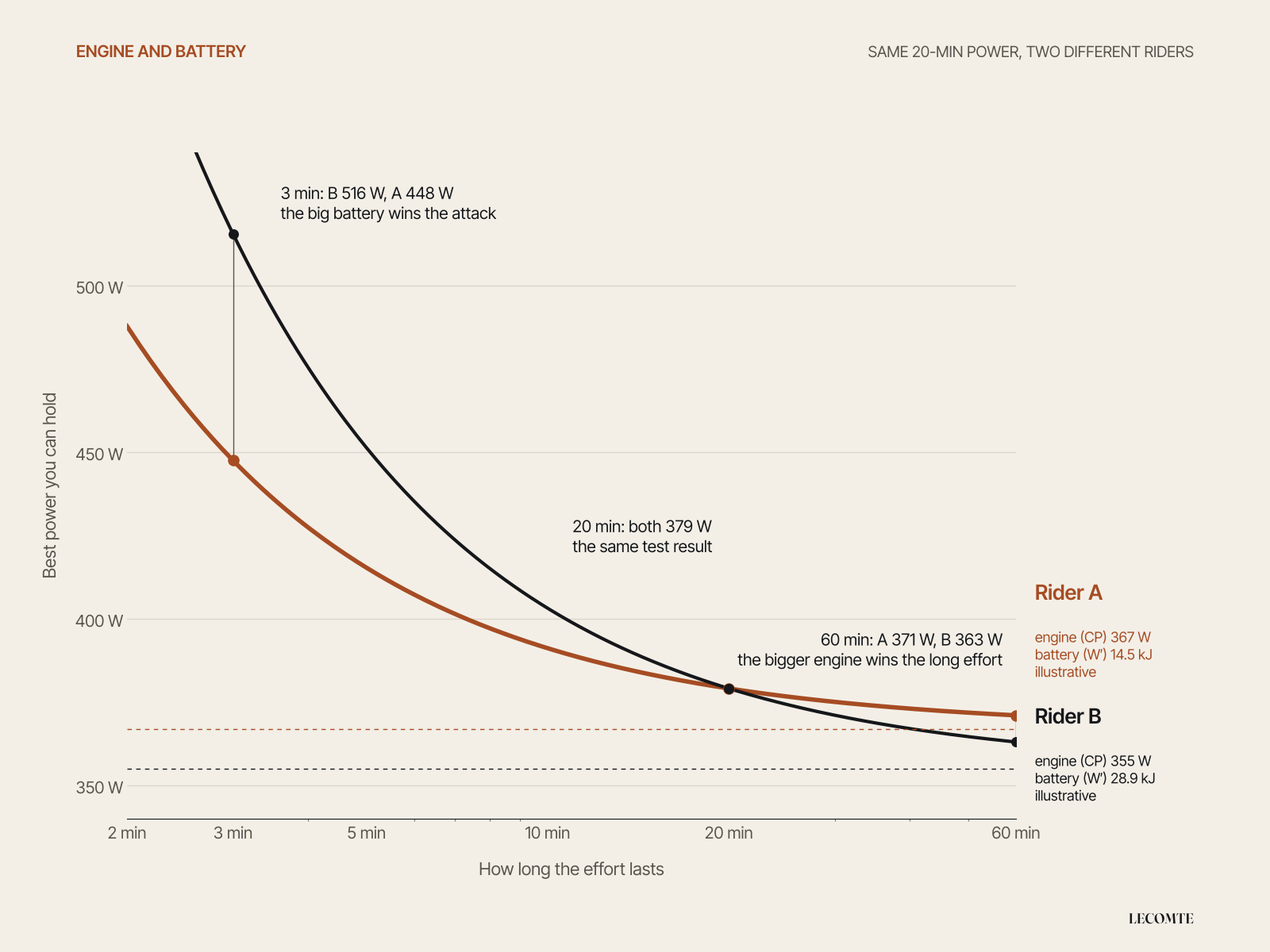
Two riders can share the same 20-minute power and still need opposite plans: one holds a long effort, the other wins a short attack. From your own hard efforts I work out which one you are: your engine, the power you can hold, and your battery, the extra work you can spend above it. Every number carries a label, measured or estimated with our model, plus a range and the test that would confirm it.
The raw file, not the app summary.
I read the second-by-second file of every key session. Terrain comes first: a climb, a descent and a gravel sector each change what your power and heart rate mean, so every effort is read against the road it was ridden on. Heart rate and power are only compared over the same minutes. And because race-day heart rate runs high on adrenaline, your zones come from training, never from a race.
I write it. You read it. It adapts.
Have an idea? Tell me, and the plan changes. Something not working? We change it. And when a structure from triathlon or running suits you better, we borrow it.
Spend your battery where the race is decided.
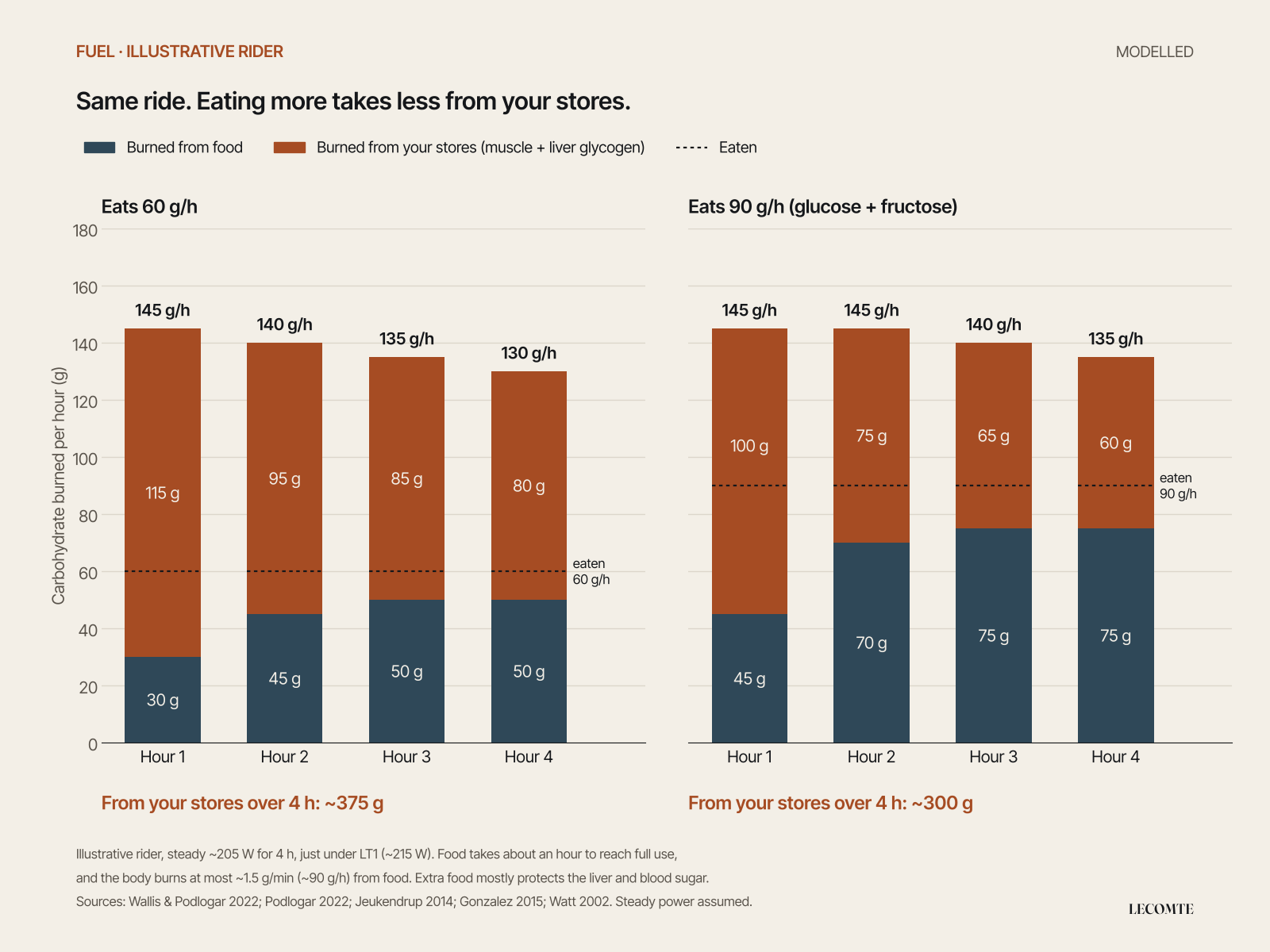
Your course is mapped climb by climb, and each climb gets its own power ceiling. Fuel per hour comes from what you burn and is rehearsed in training, so your stomach is ready on race day.
One change, not five.
After the race you get a written report from your file: what happened, what held you back, and the one change for next time.
The maps behind your plan.
Elite athletes get a library: the maps and explainers behind every plan, built around their own numbers.